Editorial note · 编辑说明 This is a single, doable ten-minute practice you can follow today, written out minute by minute. We teach within the Maoshan (茅山) lineage, but nothing here requires a teacher or prior experience. Important: if you have a mental health condition, please talk to a doctor or therapist before starting, and stop if the practice leaves you feeling worse. Meditation supports steadiness; it does not treat illness.
Before you start: two minutes of setup
Keep the preparation short so it does not become a reason to delay.
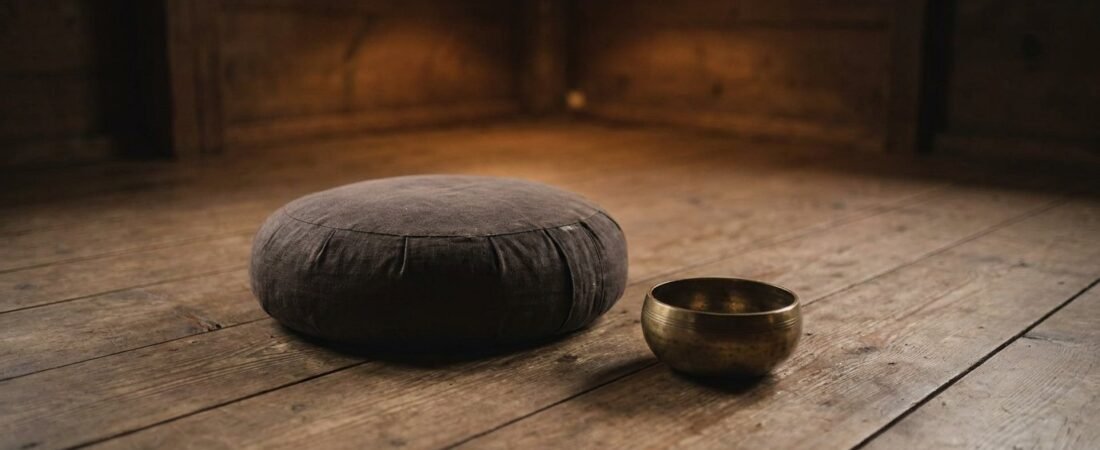
- Sit. A chair is fine. So is a cushion on the floor. Keep your back upright but not rigid, and let your hands rest in your lap.
- Loosen. Unclasp anything tight. Loosen your jaw and let your shoulders drop.
- Silence your phone. Ten minutes of quiet is the whole point.
- Set a gentle timer. Ten minutes. A soft chime, not an alarm that startles you.
Eyes can be closed or half-open, resting softly on a point on the floor a few feet ahead. Choose whichever keeps you more alert.
Minute 1 — Settle the body
Take three slow breaths, each a little longer than the last. Breathe in through the nose, out through the nose. On each exhale, let one part of the body go: first the forehead, then the shoulders, then the belly.
Do not force relaxation. Just stop adding tension. Notice where you are gripping — most people find it in the jaw, the shoulders, or the stomach — and let that spot soften.
Minutes 2 to 4 — Follow the breath
Now let the breath find its own pace. Do not control it. Simply follow it.
- Feel the breath as it enters the nostrils, cool and light.
- Feel it travel down, and feel the belly rise.
- Feel the exhale leave, slower than the inhale.
- When the mind wanders — and it will — notice, and return to the breath. Returning is the practice, not a failure of it.
In Taoist terms you are gathering qi (气, vital breath): letting it settle low, around the belly, rather than staying tight and high in the chest. A calm, low breath is the foundation of everything that follows.
Minutes 4 to 7 — Sit in quiet (zuowang, 坐忘)
This is the heart of the ten minutes. Stop counting the breath. Let your attention rest lightly and let everything else be.
Thoughts will come. Do not fight them, and do not follow them. Picture them as clouds crossing a sky — you are the sky, not the clouds. This is the state the tradition calls zuowang (坐忘, “sitting in forgetfulness”): not blanking the mind, but setting aside the running commentary of self and opinion, so that what remains can simply be.
If you lose track and spend three minutes planning tomorrow, that is fine. Come back. There is no score to keep.
The longer you rest here, the more you notice that the mind settles on its own when you stop prodding it. That is not something you achieve; it is something you stop preventing. This is why the tradition pairs stillness with simplicity — the fewer demands you carry in, the more easily the settling happens.
Minutes 7 to 9 — Gather and return
Now bring a little gentle intention back. The tradition works with the idea that qi circulates, and that quiet attention gathers it.
- Return your awareness to the belly.
- With each inhale, imagine a soft warmth gathering at the center, a few inches below the navel.
- With each exhale, let that warmth spread gently outward, without pushing.
Keep this light. Chasing a sensation is the surest way to lose it. If you feel nothing but the ordinary rise and fall of the breath, that is enough.
Minute 10 — Close gently
Do not jump up. Close slowly so the practice carries into the rest of your day.
- Take three fuller breaths, slightly deeper than before.
- Rub your palms together until they feel warm, then rest them lightly over your eyes or your belly.
- Let your attention widen to the room: sounds, air, the surface you are sitting on.
- Open your eyes and sit for ten seconds before you move.
Stand, stretch, and go on with your day. That is the complete ten-minute practice.
Making the ten minutes a habit
The only hard part is returning tomorrow. A few things help:
- Same time, same place. Anchor it to something you already do — right after coffee, or just before bed.
- Lower the bar. On a terrible day, five minutes still counts. Missing once is fine; missing four in a row is a pattern to interrupt.
- Skip the analysis. Do not grade each session. Feelings during meditation are weather, not results.
- Keep it small for a month. Resist the urge to jump to thirty minutes before ten feels natural.
Ten ordinary minutes, kept daily, will do more for you than one perfect hour you never repeat.
Two small tricks make the habit stick. The first is to attach the ten minutes to something you already do without thinking — the first coffee, the last lights-out — so the practice borrows the strength of an existing routine. The second is to make the commitment embarrassingly small. Promise yourself five minutes on your worst days and let the full ten be a bonus. A practice you can always keep, even depleted, survives far longer than one that demands you be at your best.
There is no prize for a heroic week followed by silence. The aim is a rhythm you can hold for years, in ordinary conditions, without needing motivation to carry you. That is what the tradition means by cultivation: not intensity, but return.
Common difficulties, and what to do
- “My mind won’t stop.” Minds produce thoughts. Noticing that is the practice working, not failing.
- “I got sleepy.” Sit up straighter, open your eyes a little, or practice earlier in the day rather than late at night.
- “I felt restless and wanted it to end.” Stay with it if you can, but if it is overwhelming, open your eyes and breathe normally. You can stop at any time.
- “I felt anxious or flooded.” That can happen, especially with trauma. Close the practice, ground yourself, and speak to a professional before continuing.
Once ten minutes feels steady, you can read more about the benefits of Taoist meditation and how the practice fits into a wider routine in our practical guide to practicing Taoism. But keep the bar low. The tradition is not impressed by intensity; it is impressed by return.
External references
- World Health Organization — for guidance on mental health support and when to seek professional care.
- Stanford Encyclopedia of Philosophy — Daoism — on zuowang and the contemplative tradition.
- Encyclopaedia Britannica — Taoism — an overview of Taoist practice and belief.
Shop hand-written talismans
Some people like to pair a sitting practice with a talisman kept nearby — a quiet reminder of the steadiness they are building. Every fulu we make is hand-painted in cinnabar on ritual yellow paper in the Maoshan manner and consecrated before it ships. We take requests by appointment over WhatsApp and complete up to twelve orders a day. Visit the shop, including the peace and safety talisman and the spirit-clearing talisman.