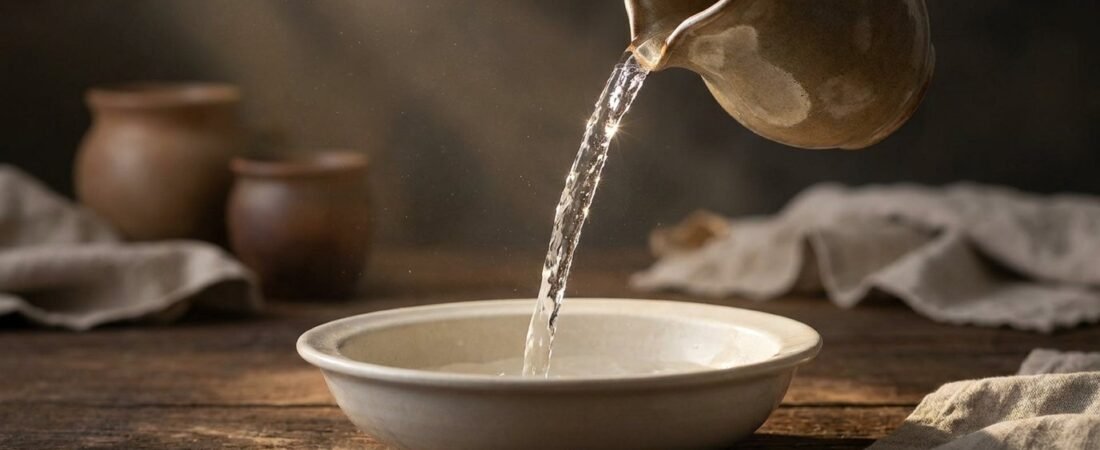
Editorial note · This guide is about the doing of a water offering — which vessel to use, how much water, where to set it, and when to change it — inside a Taoist-style blessing ceremony. It is a practical walk-through, not a study of meaning. A water offering is a ritual gesture of intention; we do not promise any result, and nothing here is medical or health advice.
What a water offering is, in one paragraph
A bowl or glass of clean water is one of the simplest offerings in Chinese ritual. In a blessing ceremony it is set on the altar or offering table as a point of stillness and a mark of respect. This article focuses on execution only: what to use, how much, where, and when. If you want the symbolism behind the practice, we cover that separately in our piece on water offerings and purity symbolism.
Choosing the vessel
Almost any clean container works. What matters is that the vessel is used only for this purpose, is easy to clean, and sits stably.
- A plain glass or small ceramic bowl is the most common choice.
- A dedicated cup kept apart from everyday kitchenware is traditional and practical.
- Avoid chipped, cracked, or printed vessels — a clean, whole container reads as respect.
- One vessel is enough. You do not need a matched set unless your practice calls for it.
Wash the vessel and let it dry before use. It should be visibly clean, not merely rinsed.
How much water
Less than people expect. A water offering is a gesture, not a pour.
- Fill to about two-thirds of the vessel — enough to look deliberate, not brimming.
- A few centimetres or a couple of fingers’ depth is a normal amount for a small bowl.
- Clean, fresh water — ideally fresh from a tap or filtered source, not left standing for days.
- No additives. No scent, no colour, no oil. Plain water.
Do not overfill. A full-to-the-brim glass is easy to spill and, in many traditions, read as careless rather than generous.
Where to place it
Position is part of the execution and worth getting right.
- On a clean, stable surface above floor level. A shelf, table, or altar — not the floor.
- In front of whatever else the surface holds — the water sits closest to the front edge, as the nearest offering.
- Away from the edge so it cannot be knocked off.
- Away from damp and dirt — not in a bathroom, not beside the stove, not under a staircase.
- Clear of open flame. If incense is burning, the water vessel sits to the side, not under falling ash.
A single water bowl on a clean shelf is a complete setup. You do not need a large altar to do this correctly.
When to offer and when to change the water
Water is offered at the start of a session and refreshed on a rhythm.
- Before a ceremony: set fresh water before you begin anything else.
- Daily, if you keep a practice: refresh the water each morning.
- If not daily: change it at least every few days, and always if it looks cloudy or has gathered dust.
- After a ceremony: the water can be poured away respectfully and the vessel washed and left ready for next time.
Stale water defeats the gesture. The point is that the offering is clean and current, so replacing it is part of the practice, not an afterthought.
Water inside a longer blessing ceremony
In a full home or business blessing, the water is usually the first thing set out and the quietest element throughout. A common order:
- Set the water on the clean surface, filled to about two-thirds.
- Light incense (with ventilation), to the side of the water.
- State the intention for the ceremony.
- Move through the space if the rite includes walking the rooms.
- Place the talisman in its settled spot, away from both flame and water.
- Close the ceremony and, afterwards, pour the water away and wash the vessel.
Notice that the water is never in the way of flame or the talisman. Keeping a dry zone for the paper fulu is a basic rule in any blessing that uses both.
If the ceremony places a protection piece on the same surface, set it well clear of the bowl. A home protection talisman belongs on a dry, elevated shelf, not beside an open vessel that could tip. Keeping water and paper in separate zones is the simplest way to protect both.
Practical care and hygiene
A water offering sits in a living home, so a little upkeep goes a long way.
- Wash the vessel regularly — glass and ceramic can develop a film if water stands.
- Keep it out of reach of pets and small children to avoid spills and breakage.
- Do not let it sit in direct sun for days; warmth and light speed up algae and cloudiness.
- Empty it before you travel rather than leaving a bowl of water for weeks.
- If a bowl breaks, sweep carefully and replace it; there is no penalty for an accident.
Common questions
Can I use tap water?
Yes, in most places. Fresh, clean water is the requirement; fancy or bottled water is not. If your tap water is heavily treated or not for drinking, use filtered or bottled water for a clean appearance.
Do I need a specific number of bowls?
For a home practice, one is standard. Some formal rites use more, but a beginner gains nothing from extra vessels.
Should I burn incense with it?
You can, safely, with ventilation — but the two are independent. Water alone is a complete offering, and it is the safer default in a small flat or where smoke is a problem.
Where do I put the water after?
Pour it away respectfully — into a sink or, traditionally, onto a plant or the ground. Then wash and dry the vessel.
Water asks the least of a ceremony and sets its tone: something clean, still, and quietly replaced.
If you are setting up a first practice, this pairs with the routines in our guide to home altar basics, and with a peace and safety talisman kept on the same dry shelf. For a move or a fresh start, the same steps fold into a home blessing ritual, where the water is the first element placed and the last cleared away.
External references
- Stanford Encyclopedia of Philosophy — Daoism — background on Taoist ritual and practice.
- Internet Archive — public scans of Taoist texts and related source material.
Shop hand-written talismans
If you keep water on your altar shelf, the natural companion is a hand-drawn, consecrated talisman. Every piece at Daofuxuan is written in cinnabar on ritual yellow paper and prepared one at a time. We take orders by WhatsApp appointment — around twelve a day — so browse the shop, tell us what you are setting up, and we will help you choose.